
Acne and Biofilm: The Invisible Reason Your Skin Keeps Breaking Out.
Bacteria's invisible secret explained.

Need to Know
- Biofilm is a structured colony of bacteria that takes root inside your pores and hair follicles. It's invisible, but very much in charge.
- Bacteria inside a biofilm produce a protective gel called EPS that shields them from your skincare and makes them up to 5,000× harder to eliminate.
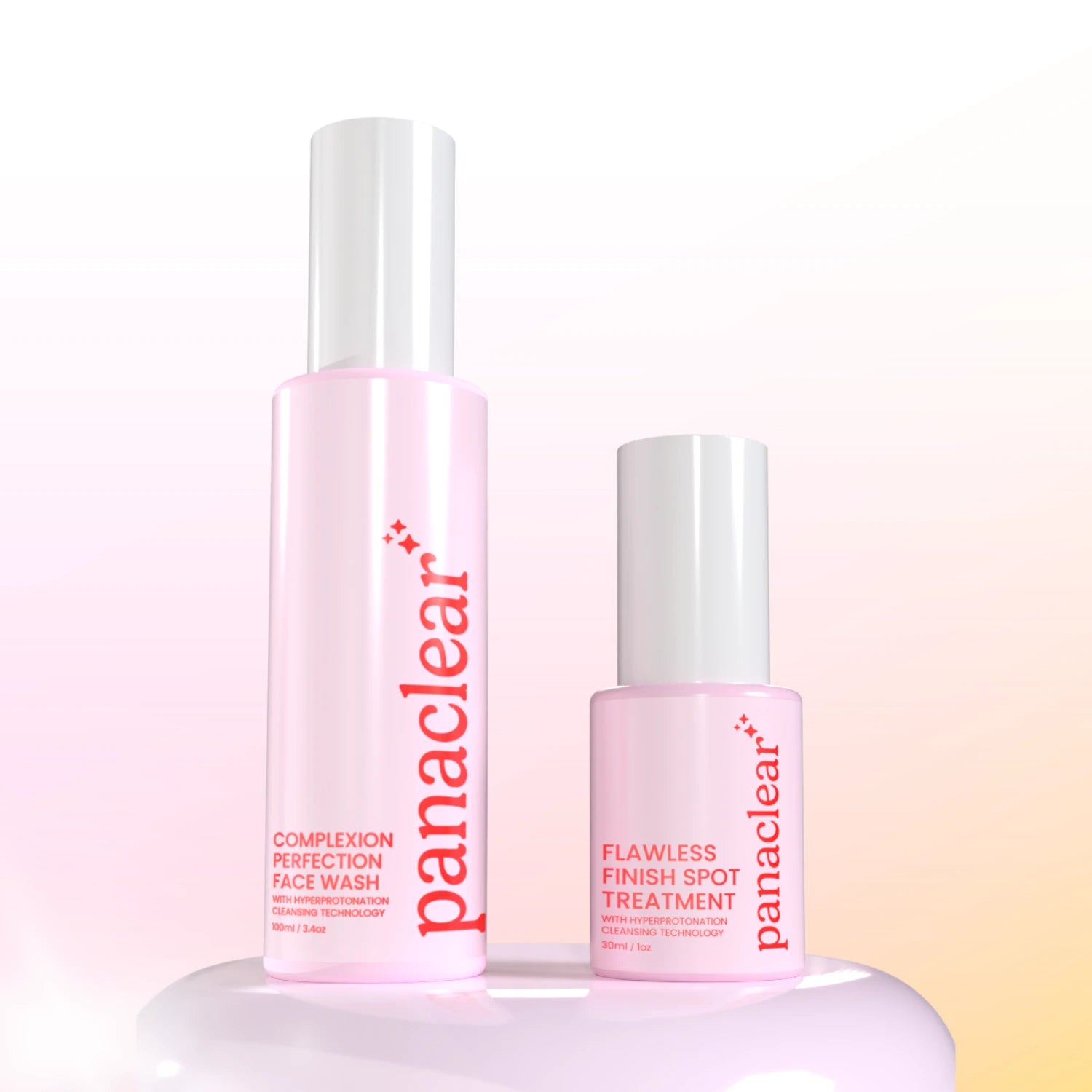
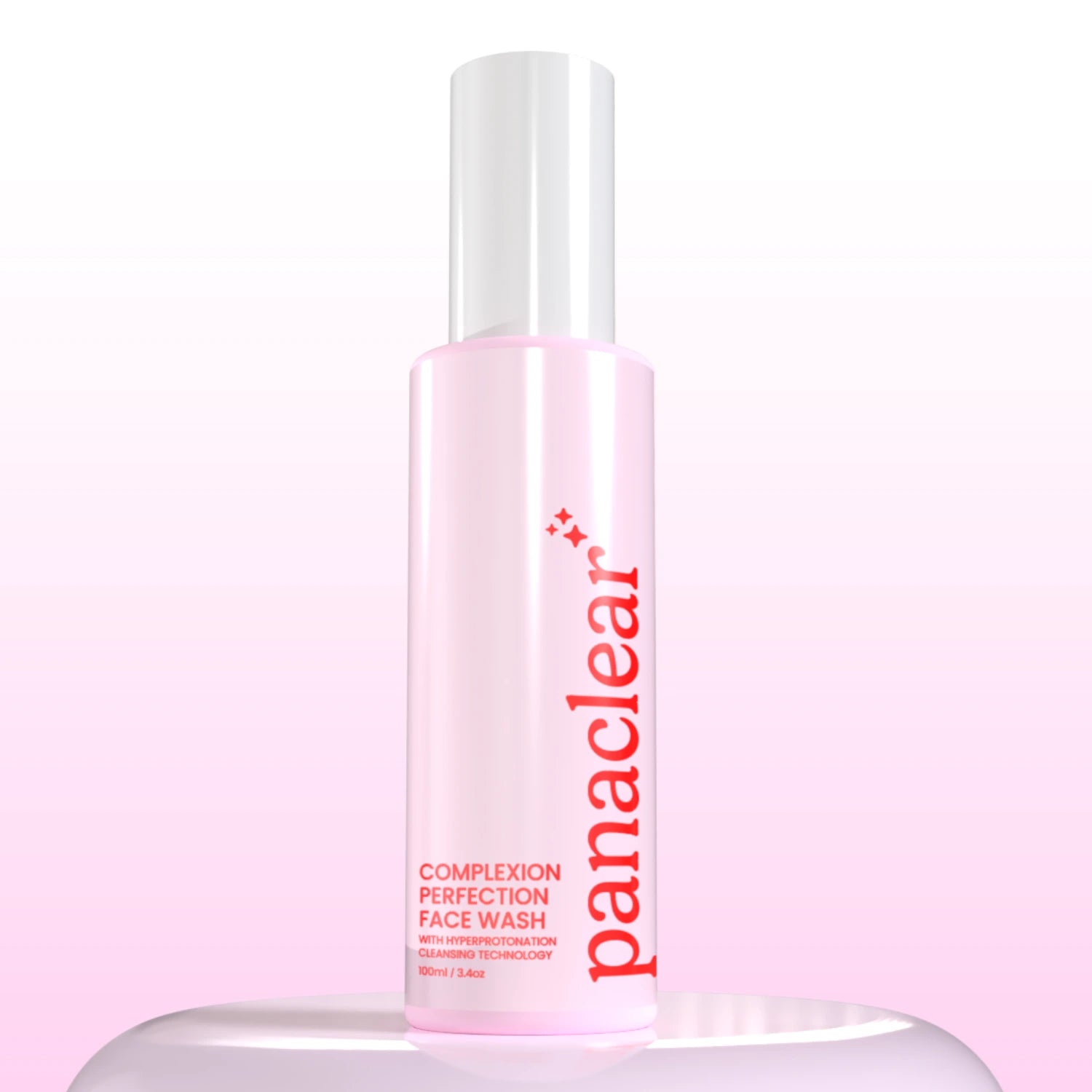
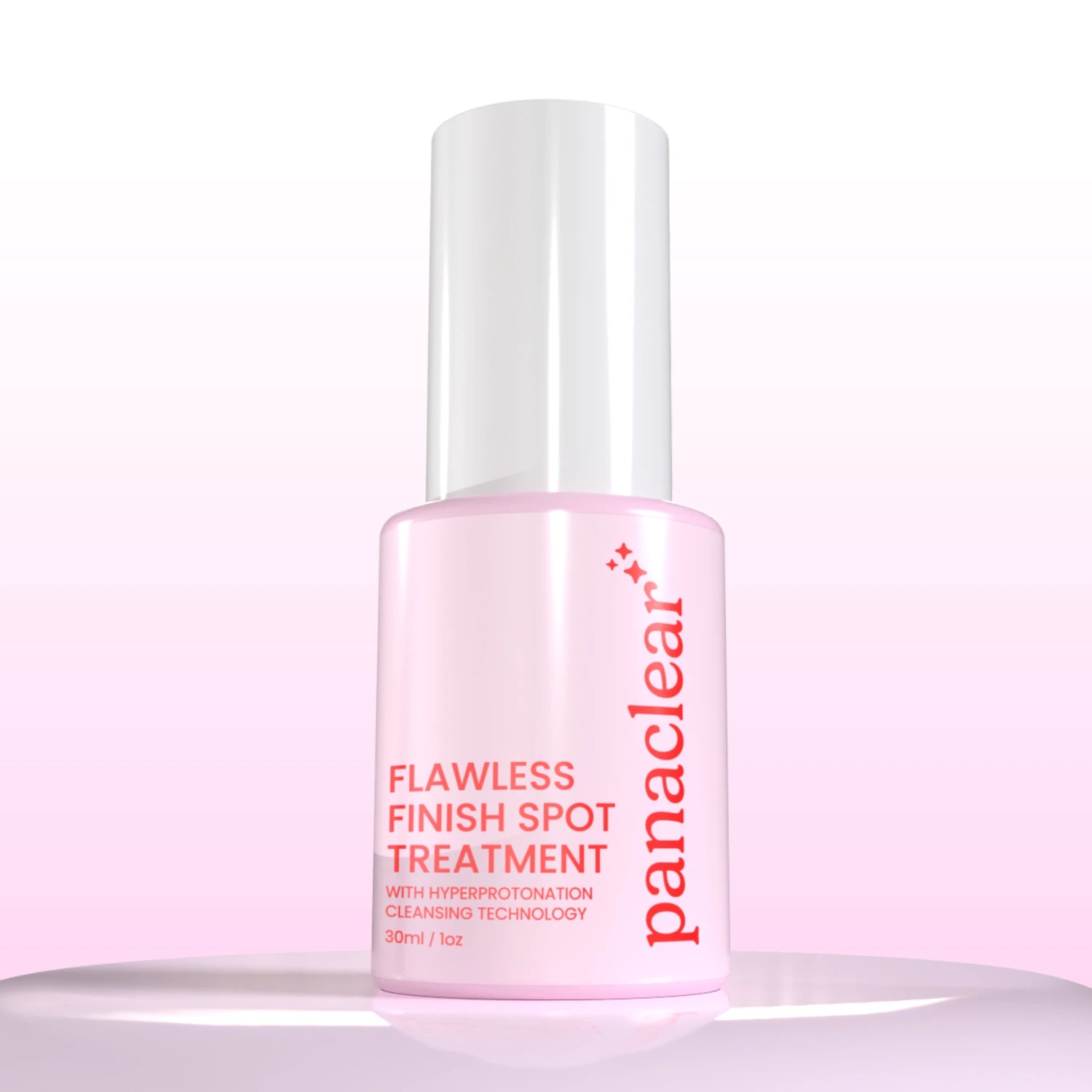
- Panaclear is the first anti-biofilm skincare range built around hyperprotonation cleansing technology designed to dissolve EPS and get to the bacteria beneath.
Why your skincare routine isn't helping your acne
You've committed to the routine. You've rotated the actives. You've used the prescription-grade formulas and the cult-favourite spot treatments. And yet the breakouts return like they never left.
Here's a thought: what if the products aren't failing because of what they contain, but because of what they're up against?
The culprit could be something microscopic and largely overlooked in mainstream skincare conversation: biofilm, a structured bacterial fortress that forms inside your pores and actively resists the treatments you're throwing at it.
What exactly is biofilm and how does it connect to acne?

Picture a fully functioning underground neighbourhood: packed, organised, and built entirely by bacteria. That's biofilm. It's not a random cluster of microbes; it's an intentional community with structure, communication systems, and collective defence.
The concept has been around since the 1600s, but biofilm in skincare is only now receiving the attention it deserves. And once you understand what's happening at a microscopic level, a lot of frustrating skin experiences start to make sense.
When bacteria settle into the skin, they secrete a substance called extracellular polymeric substance, EPS for short. This is a dense, gel-like matrix constructed from proteins, lipids, DNA, and polysaccharides (long chains of sugar molecules). It acts as both glue and armour: locking the bacteria in place, bonding them to one another, and forming a physical barrier that most topical skincare simply cannot penetrate.
Somewhere between 80 and 90% of all bacteria on the planet live inside biofilm structures. Your skin is no exception.
Once a bacterium joins a biofilm, its behaviour changes entirely. Compared to "free-floating" planktonic bacteria, biofilm-dwelling bacteria:
-
Coordinate with neighbouring bacteria through chemical messaging to adapt to environmental changes through a process known as quorum sensing
-
Exchange resources and genetic material, including genes that code for treatment resistance
-
Respond and adapt to environmental threats far more rapidly than isolated bacteria
-
Become dramatically more difficult to neutralise using conventional skincare approaches that weren't formulated with biofilm in mind
This is the reason some blemishes shrug off even aggressive treatments and why your pimples resurface in the same spot, again and again.
Research into biofilm associated with acne has confirmed that Cutibacterium acnes (previously known as Propionibacterium acnes) is capable of establishing biofilms within hair follicles. This is one of the most significant and most under-discussed mechanisms driving persistent, recurring breakouts.
Most cleansers make contact only with the outermost layer of the biofilm's EPS shield. The bacteria underneath, surrounded by their self-made matrix, remain completely untouched.
"The method by which a seemingly harmless commensal [neutral bacteria] triggers such a strong immune response has confused scientists for decades until its biofilm-forming abilities had been discovered."
From: doi.org/10.13188/2373-1044.1000029

Biofilm tends to establish itself deep within hair follicles and pores. Once the colony is protected by EPS, those bacteria can be up to 5,000 times more resistant to external attack. That's not a minor difference; it's the difference between a treatment working and a treatment achieving essentially nothing at the source.
Is biofilm why my breakouts keep returning in the same spot?
Quite possibly, yes.
Classic acne-fighting ingredients like benzoyl peroxide and salicylic acid were developed to target planktonic bacteria, the free-floating kind, and exfoliate the skin. They're working from a playbook that predates our understanding of biofilm in acne. Against an established EPS matrix, even high-concentration formulas can struggle to make meaningful contact with the bacteria driving the appearance of acne.
This isn't a failure of the ingredients per se, it's a mismatch of target. If your skincare isn't designed with anti-biofilm action in mind, it may be addressing only the surface expression of acne rather than the bacterial infrastructure that keeps generating it.
What does anti-biofilm skincare actually do differently?
Genuine anti-biofilm skincare isn't just a stronger version of conventional acne products. It's a fundamentally different approach. Rather than attempting to overpower bacteria through sheer concentration of actives, it targets the EPS matrix directly, breaking down the structure that allows bacteria to hide and persist.
Once the EPS is disrupted, the biofilm loses its structural integrity. Bacteria that were previously shielded become exposed. Your skincare can finally reach them.
This is the principle behind Panaclear's hyperprotonation cleansing technology: designed not just to cleanse the skin's surface, but to work against the sticky matrix that makes acne biofilm so difficult to shift. It's the distinction between surface-level skincare and skincare that addresses what's actually driving the cycle.
The bottom line on biofilm and acne
If your breakouts feel stubborn, nothing seems to clear them fully, or they return quickly after improving, biofilm deserves serious consideration as a contributing factor.
The science is clear: bacteria living inside biofilms are not the same as bacteria in isolation. They are more organised, more protected, and far harder to eliminate without biofilm-specific skincare that targets the EPS matrix rather than the bacteria alone.
Understanding this doesn't just reframe why past approaches may have fallen short. It points toward what an effective solution actually needs to do.
It's not just what's on your skin. It's what's stuck to it. Panaclear solves the biofilm problem.
If you've been stuck in the "try everything" cycle, you're not alone. But the missing piece probably isn't a stronger formula or a new active ingredient, it's a cleanser that's actually built to tackle the problem at its source.
Panaclear is the only anti-biofilm skincare range formulated around hyperprotonation cleansing technology. At its core is glycerol monolaurate (monolaurin): a naturally derived fatty acid combined with citric acid and emulsifiers to physically disrupt the EPS matrix that shields acne-causing bacteria. Once that structure breaks apart, bacteria lose their protection and can finally be cleared away.
In laboratory testing, the results were unambiguous.
"[Hyperprotonation] killed 100% of bacteria... this with the log10 result assures the product will attract significant attention in health and allied industries."
Professor Steve Wesselingh, Inaugural Executive Director, SAHMRI
Most cleansers manage what's on the surface. Panaclear goes after what's underneath: the biofilm structure that conventional anti-acne skincare was never designed to reach. If you're serious about breaking the breakout cycle, this is where to start.

Best Skin Ever Bundle
Biofilm-targeting cleansing duo for calmer, clearer-looking skin.
SHOP NOW