
Anti-Biofilm Face Wash: What It Is and How It Works
Most face washes clean your skin. An anti-biofilm face wash targets what's deeper.

Need to Know
- An anti-biofilm face wash is a cleanser formulated to target the extracellular matrix (EPS) that bacteria build to protect themselves inside your pores, not just the bacteria themselves.
- Conventional acne face washes were designed to target planktonic (free-floating) bacteria. Against an established biofilm, even well-known actives like benzoyl peroxide can be largely ineffective.
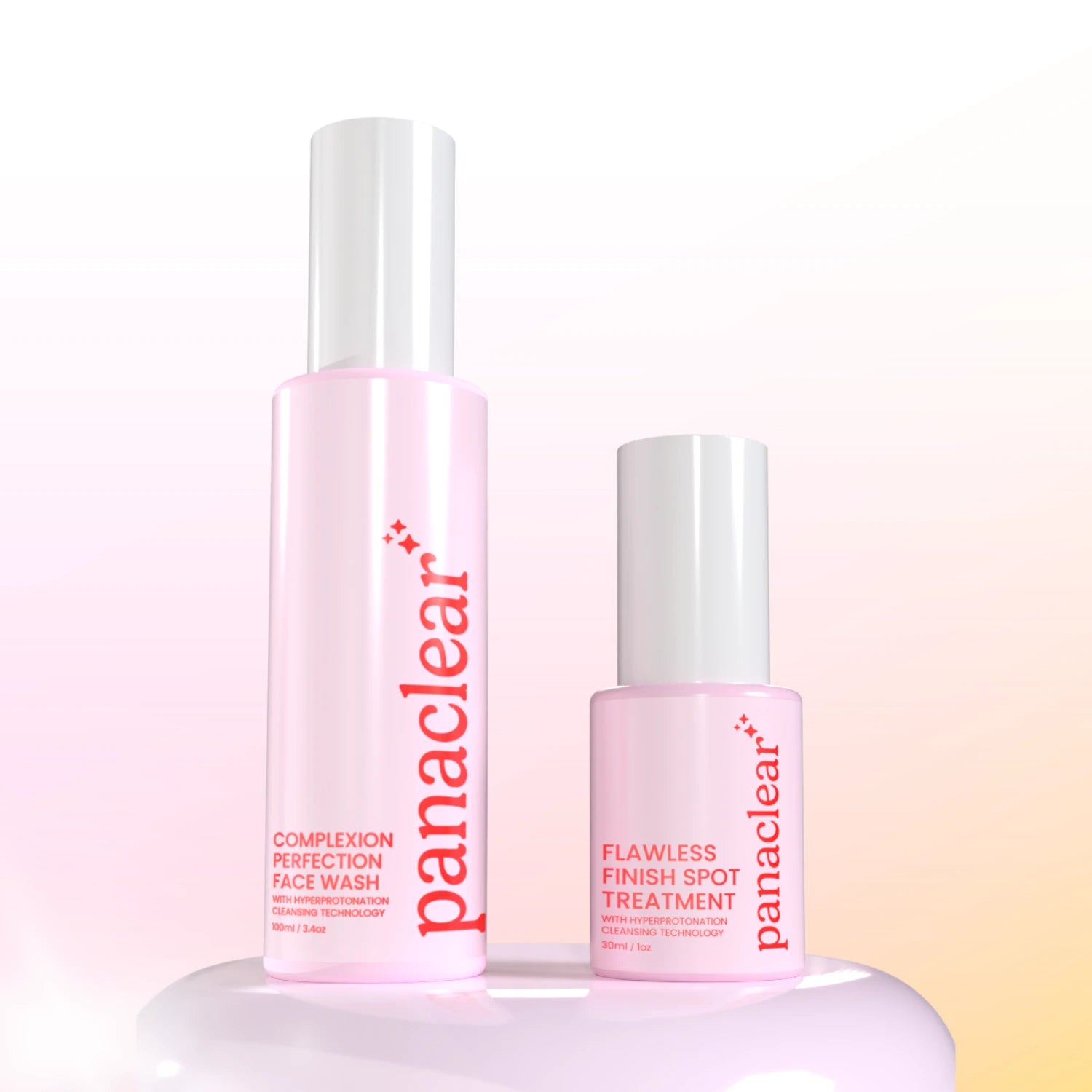
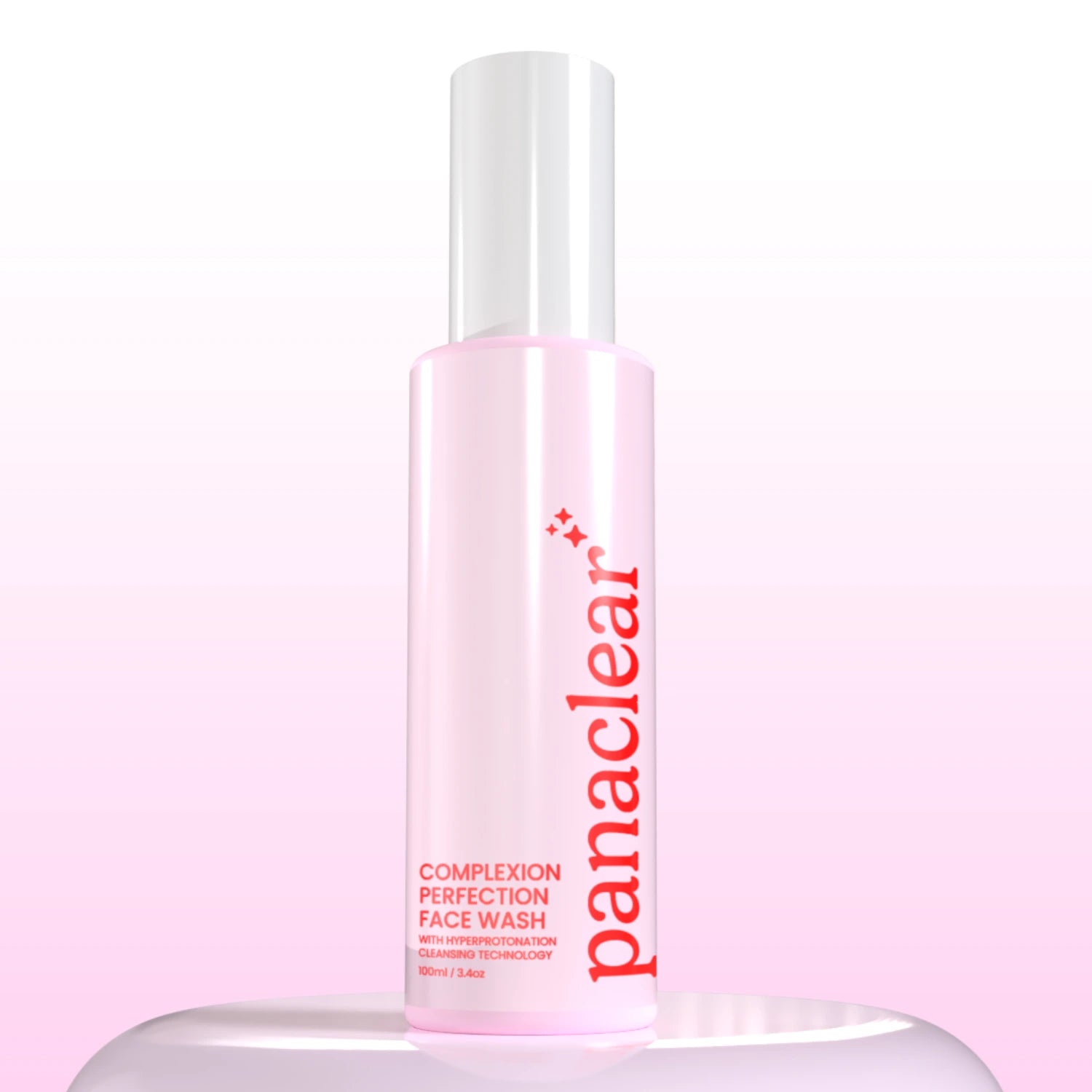
- Panaclear's Complexion Perfection Face Wash uses hyperprotonation cleansing technology to disrupt the EPS matrix directly, supporting a clearer-looking complexion through biofilm-targeted cleansing formulated to be gentle on the skin barrier.
What is an anti-biofilm face wash?
The term sounds technical, but the idea behind it is straightforward. Most face washes are designed to remove what sits on your skin: oil, surface bacteria, environmental debris. An anti-biofilm face wash is designed to go further by targeting the structured bacterial communities that anchor themselves inside hair follicles and pores, shielded by a gel-like protective matrix your regular cleanser was never built to reach.
That distinction matters more than it might initially seem. If recurring breakouts are part of your experience - think spots that return in the same places, skin that improves briefly then cycles back - there is a reasonable chance that biofilm is involved. Understanding what that means, and what a cleanser needs to do about it, changes how you think about face washing entirely.
Why biofilm makes ordinary face washes fall short
Bacteria on skin do not simply drift around waiting to be washed away. The majority of them live in organised, self-built communities called biofilms: dense colonies anchored to the surface by a substance called extracellular polymeric substance, or EPS.
EPS is a complex matrix of proteins, lipids, DNA, and long-chain carbohydrates that bacteria secrete collectively. It holds the colony in place, regulates communication between bacteria through a process called quorum sensing, and most importantly functions as physical armour. Studies have found that bacteria living inside a biofilm can be up to 5,000 times more resistant to external treatments than bacteria in isolation.
Biofilm is not simply bacteria. It is a self-organised colony with its own communication network, shared resources, and a protective structure purpose-built to survive the things you throw at it.

What conventional cleansers are actually targeting
The most recognised ingredients in acne face washes like benzoyl peroxide and salicylic acid were developed and tested against planktonic bacteria: the free-floating variety that exists in isolated lab conditions. In that context, they work.
But research has shown that when these same ingredients encounter established biofilm cultures, the picture changes significantly. Studies measuring their efficacy against biofilm-dwelling Cutibacterium acnes have found that some concentrations of benzoyl peroxide were assessed as biologically ineffective against the biofilm matrix, as in they worked to reduce bacterial populations, but not by a meaningful enough margin to be considered truly effective at the source.
This is not a failure of the ingredient itself. It is a mismatch of target. A face wash designed around planktonic bacteria is, at best, managing the outer expression of a deeper problem.
The EPS matrix: biofilm's built-in barrier
To understand why an anti-biofilm face wash needs to work differently, it helps to understand what it is actually up against.
When Cutibacterium acnes, the bacterium most closely associated with recurring breakouts, colonises a hair follicle, it does not stay in a simple, accessible state. Research has confirmed that it forms biofilms within the follicular environment, using EPS as its primary defence. That structure increases the cohesiveness of the colony, allows bacteria to attach more firmly to follicle walls, and creates a microenvironment where bacteria are metabolically organised to resist disruption.
Studies examining the skin of people who experience acne compared to those who do not have found approximately 2.5 times more biofilm-forming strains of C. acnes on acne-prone skin. The conclusion is significant: it may not be the presence of the bacterium alone that drives the appearance of acne, but the presence of the biofilm-forming strains that make it persistent.
Skin with acne does not necessarily have more bacteria than skin without it. It has more of the bacteria that form biofilms and that changes everything about what a face wash needs to do.

What a genuine anti-biofilm face wash needs to do differently
A face wash that earns the term anti-biofilm cannot simply contain a higher concentration of conventional actives. It requires a different mechanism: one that addresses the EPS matrix rather than ignoring it.
There are two requirements for genuine biofilm cleansing. First, the cleanser must be able to physically disrupt or destabilise the EPS matrix and break down the structure that holds bacteria in their protected state. Second, once that structure is compromised, cleansing agents need to be able to reach the bacteria that were previously shielded.
Most formulations satisfy neither condition. Surface-active agents can reduce what is visible on skin without ever penetrating the biofilm below. The result is skin that appears cleaner, briefly, while the bacterial infrastructure responsible for recurring breakouts remains intact.

Complexion Perfection Face Wash
pH balanced anti-biofilm face wash formulated to cleanse what conventional cleansers ignore.
SHOP NOWThe role of pH in biofilm cleansing
pH plays a more consequential role in biofilm-targeted cleansing than is commonly understood. Skin's natural pH sits between approximately 4.5 and 5.5 making it mildly acidic. This acidity is not incidental; it maintains the acid mantle, supports the skin barrier, and regulates the microbial environment on the skin's surface.
A cleanser formulated at a compatible pH supports that environment. But for a biofilm face wash, low pH serves an additional function. A proton-rich, acidic environment increases the permeability of the EPS matrix and the membranes of biofilm-dwelling bacteria. This is the principle that makes hyperprotonation technology possible: using pH not only to protect the skin's natural terrain, but to actively destabilise the conditions that allow biofilm to persist.
Low pH leads to more hyperprotonation action, which leads to greater disruption of the EPS matrix, which supports cleaner, clearer-looking skin. That chain of consequence from formulation chemistry to skin outcome is the logic behind Panaclear's approach.
How Panaclear's anti-biofilm face wash is formulated
Panaclear's Complexion Perfection Face Wash is built around hyperprotonation technology: a formulation process that combines glycerol monolaurate, a naturally derived fatty acid, with citric acid and emulsifiers at a carefully maintained low, but never harsh, pH.
The mechanism works in two stages. First, the proton-rich environment created by the low pH increases permeability in the biofilm's EPS matrix, weakening its structural integrity. Second, the monolaurin and emulsifier complex enters the disrupted matrix, cleansing bacteria that would otherwise remain completely shielded.
The result is a face wash that does not strip the skin, it is formulated at a pH compatible with the acid mantle, making it supportive of the skin barrier rather than disruptive to it. The cleansing action is targeted at the biofilm matrix rather than at the skin's natural protective environment.
"[Hyperprotonation] killed 100% of bacteria... this with the log10 result assures the product will attract significant attention in health and allied industries."
Professor Steve Wesselingh, Inaugural Executive Director, SAHMRI
What to look for when choosing an anti-biofilm face wash
Not every cleanser that mentions biofilm has been formulated with genuine anti-biofilm mechanisms. When evaluating a face wash for its biofilm-targeting potential, a few questions are worth asking.
Does it explain the mechanism? A credible anti-biofilm face wash should be able to articulate how it disrupts the EPS matrix, not just claim to target bacteria. Bacteria-targeting and biofilm-targeting are meaningfully different things.
Is it formulated at skin-compatible pH? A cleanser above pH 7 is already working against the skin's natural environment. For biofilm-targeted cleansing with a protonation-based mechanism, an acidic pH is not just preferable, it is functionally necessary.
Is the barrier considered alongside the cleanse? Aggressive cleansing that strips sebum and disrupts the skin microbiome can leave the skin more vulnerable, not less. A well-formulated biofilm face wash should support the barrier while cleansing at depth. The goal is regulation, not depletion.
Does the formulation include substantiated testing? The biofilm-cleansing category is emerging, and not all claims are equal. Look for products that can point to laboratory evidence, particularly studies conducted on biofilm cultures, not planktonic bacteria alone, which tell a very different story.
Cleansing at the level where breakouts actually begin.
If breakouts have been a recurring part of your skin experience the most likely explanation is not that your current cleanser isn't strong enough. It is that it is working on the wrong level.
The vast majority of conventional face washes were not designed with biofilm in mind. They address what is easily accessible on the skin's surface while the bacterial infrastructure beneath it protected by EPS remains largely untouched.
An anti-biofilm face wash addresses that gap. And Panaclear's approach, built around hyperprotonation technology and barrier-compatible formulation, is designed to do that without compromising the skin environment it cleanses.
Complexion Perfection Face Wash
pH balanced anti-biofilm face wash formulated to cleanse what conventional cleansers ignore.
SHOP NOW