
Biofilm On Your Face: What It Is and Why Your Skincare Can't Reach It
The invisible layer on your face that skincare can't reach.

Need to Know
- Biofilm on your face is a structured colony of bacteria encased in a protective gel. It forms inside pores and hair follicles, and most skincare never reaches it.
- This invisible layer is a key reason breakouts persist, return to the same spots, and resist conventional treatments like benzoyl peroxide and salicylic acid.
- Addressing biofilm requires skincare designed specifically to disrupt the protective matrix, not just target bacteria on the surface.
What is biofilm on your face?
You have probably never seen it, and unless you have spent time reading dermatology journals, you may not have heard of it either. But if you have ever dealt with breakouts that refuse to stay gone, biofilm on your face may be the reason why.
Biofilm is a structured community of bacteria living together inside a self-produced protective matrix. It is not a random scattering of individual microbes. It is an organised colony, complete with chemical communication systems, shared resources, and a physical shield that keeps the outside world at bay.
That shield is called extracellular polymeric substance, or EPS. Think of it as a dense, sticky gel constructed from proteins, lipids, DNA, and polysaccharides (long chains of sugar molecules). EPS holds the bacterial community together, anchors it to surfaces like the inside of your pores and hair follicles, and forms a barrier that most topical skincare products simply cannot get through.
Every surface of the body that encounters the outside world carries some form of biofilm, from the teeth to the gut to the skin. On the face, biofilm tends to concentrate in areas rich in sebum: the forehead, nose, chin, and cheeks, the regions where breakouts most commonly appear.
Roughly 80 to 90 percent of all bacteria on Earth live inside biofilm structures. Your face is no exception.
Why does biofilm form on your face specifically?
The short answer: because your face creates the ideal environment for it.
Facial skin is biologically distinct from skin elsewhere on the body. The stratum corneum, the outermost layer of skin, is thinner on the face. It has higher rates of sebum production, especially across the T-zone, and its barrier function is more easily disrupted. These characteristics create a microenvironment that bacteria are particularly good at exploiting.
The bacterium most closely associated with facial biofilm and acne is Cutibacterium acnes (previously known as Propionibacterium acnes). It thrives in the lipid-rich environment of facial pores, and its genome contains genes that encode for the production of extracellular polysaccharides, a core building material of biofilm.
Research has found that the skin of individuals experiencing acne tends to harbour significantly more of the C. acnes strains known for high levels of biofilm formation, roughly 2.5 times as much as skin without acne. This suggests that it is not bacteria alone driving the appearance of breakouts, but bacteria that have organised themselves into biofilm.
There is another factor that makes the face particularly susceptible. Studies have observed that people unconsciously touch their faces dozens of times per hour, often around the mouth, nose, and eyes. Each touch can introduce new microbes and further disturb the delicate microbial balance of the facial skin, potentially encouraging biofilm formation in sebum-rich follicles.
What does biofilm on the face look like?
Here is the frustrating part: you cannot see it. Biofilm on the face is invisible to the naked eye. There is no film you can peel off, no visible residue that signals its presence. That invisibility is part of what makes it so easy to overlook and so difficult to address.
What you can observe are its effects. If your experience includes any of the following, biofilm may be playing a role:
-
Breakouts that keep returning to the same areas of your face, particularly along the jawline, chin, or cheeks
-
Blemishes that resist skincare you have used consistently and correctly
-
Skin that seems to improve temporarily after switching products, only for breakouts to reappear within weeks
-
A persistent feeling that something deeper is driving your skin concerns, even when the surface seems under control
These patterns are consistent with what happens when bacteria are protected inside a biofilm matrix rather than living freely on the skin's surface.
How does biofilm protect bacteria on your face?
Once bacteria settle into a biofilm, they behave very differently from their free-floating counterparts, known as planktonic bacteria. Understanding this difference is important, because it explains why so many conventional approaches fall short.
Inside a biofilm, bacteria:
-
Coordinate with neighbouring cells through chemical messaging, a process called quorum sensing, to adapt collectively to environmental changes
-
Exchange genetic material, including genes that code for resistance to common treatments
-
Respond to threats far more rapidly than isolated bacteria, adjusting their defences in real time
-
Become dramatically harder to affect, with some research suggesting bacteria inside biofilm can be up to 5,000 times more resistant to external agents
That last point is worth sitting with. This is not a marginal increase in resilience. It is the difference between a treatment making meaningful contact with the bacteria driving your breakouts and a treatment that barely registers.
Inside biofilm, bacteria are not just surviving. They are communicating, sharing resources, swapping resistance traits, and collectively adapting to whatever you apply to your face.

Why most face washes and acne treatments do not target biofilm
Most skincare products designed for breakout-prone skin were formulated before the role of biofilm in acne was widely understood. Ingredients like benzoyl peroxide, salicylic acid, and topical antibiotics were developed to target planktonic bacteria, the kind floating freely on and around the skin's surface.
Against those free-floating microbes, these ingredients can be extremely effective. Against an established biofilm, the picture changes significantly. The EPS matrix acts as a physical and chemical barrier, preventing active ingredients from reaching the bacteria inside.
Laboratory research has confirmed this. Studies measuring the effectiveness of common anti-acne ingredients against biofilm cultures have found that while some chemicals perform well against planktonic bacteria, their efficacy drops substantially in the presence of biofilm. Typical concentrations of benzoyl peroxide have even been described as biologically ineffective when tested against biofilm-protected colonies.
This is not a failure of the ingredients themselves. It is a mismatch between the tool and the problem. When a product is designed to address surface-level bacteria but the bacteria driving the breakout cycle are protected deep inside a pore behind a layer of EPS, even a well-formulated product may only manage the visible symptoms without reaching the underlying structure.
Can you remove biofilm from your face?
This is the question that matters most, and the answer is encouraging.
You cannot physically scrub biofilm away. It is not a surface residue that responds to exfoliation or mechanical cleansing. The EPS matrix is anchored to the walls of pores and follicles at a level that no cloth or brush can reach.
What can be done is to disrupt the matrix itself. When the EPS structure is broken down, the biofilm loses its protective integrity. The bacteria that were shielded inside become exposed, and cleansing can finally reach them.
This requires a fundamentally different approach to cleansing: not stronger concentrations of the same ingredients, but a formulation specifically designed to target the biofilm matrix. The distinction is important. Increasing the strength of an active that was never designed for biofilm does not solve the problem. What changes the equation is a mechanism that addresses the EPS directly.
How Panaclear approaches biofilm on the face
Panaclear was built around this principle. At the core of every Panaclear formulation is hyperprotonation cleansing technology: a process designed to dismantle the protective EPS matrix that shields bacteria inside biofilm.
Hyperprotonation works by creating a proton-rich (low pH) environment that increases the membrane permeability of the biofilm's extracellular polymeric substances. In plain terms, it weakens the gel-like barrier from the inside, allowing cleansing agents to penetrate deeper and reach what is protected underneath.
The formulation combines glycerol monolaurate (monolaurin), a naturally derived fatty acid, with citric acid and emulsifiers. Together, these ingredients work to physically disrupt the EPS matrix while supporting the skin's natural acid mantle and barrier function.
The sequence is straightforward:
Low pH → more hyperprotonation action → greater biofilm disruption → cleansing reaches the bacteria beneath → clearer-looking skin.
This is not about stripping the skin or overwhelming it with harsh chemicals. It's about targeting the enemy of clearer looking skin. Panaclear is designed to be barrier-supporting and microbiome-aware, cleansing the biofilm without compromising the skin's own defences.

A different way to think about skincare
For a long time, the conversation around breakouts has focused on surface-level factors: excess oil, clogged pores, and bacteria count. These things matter. But they tell an incomplete story when the bacteria driving the cycle are living inside a structure that was specifically built to resist interference.
Understanding biofilm on the face changes the way you think about what effective cleansing actually requires. It explains why some breakouts return despite consistent routines. It explains why increasing the strength of a product does not always lead to better results. And it points toward a clearer principle: the barrier protecting bacteria needs to be addressed before the bacteria themselves can be reached.
This is not about adding more steps to your routine. It is about making the steps you already take more effective by ensuring they can actually reach what they need to.
Start with the structure. The skin will follow.
If your breakouts feel stuck in a cycle, and nothing you have tried has fully broken it, biofilm on your face deserves serious consideration as a contributing factor.
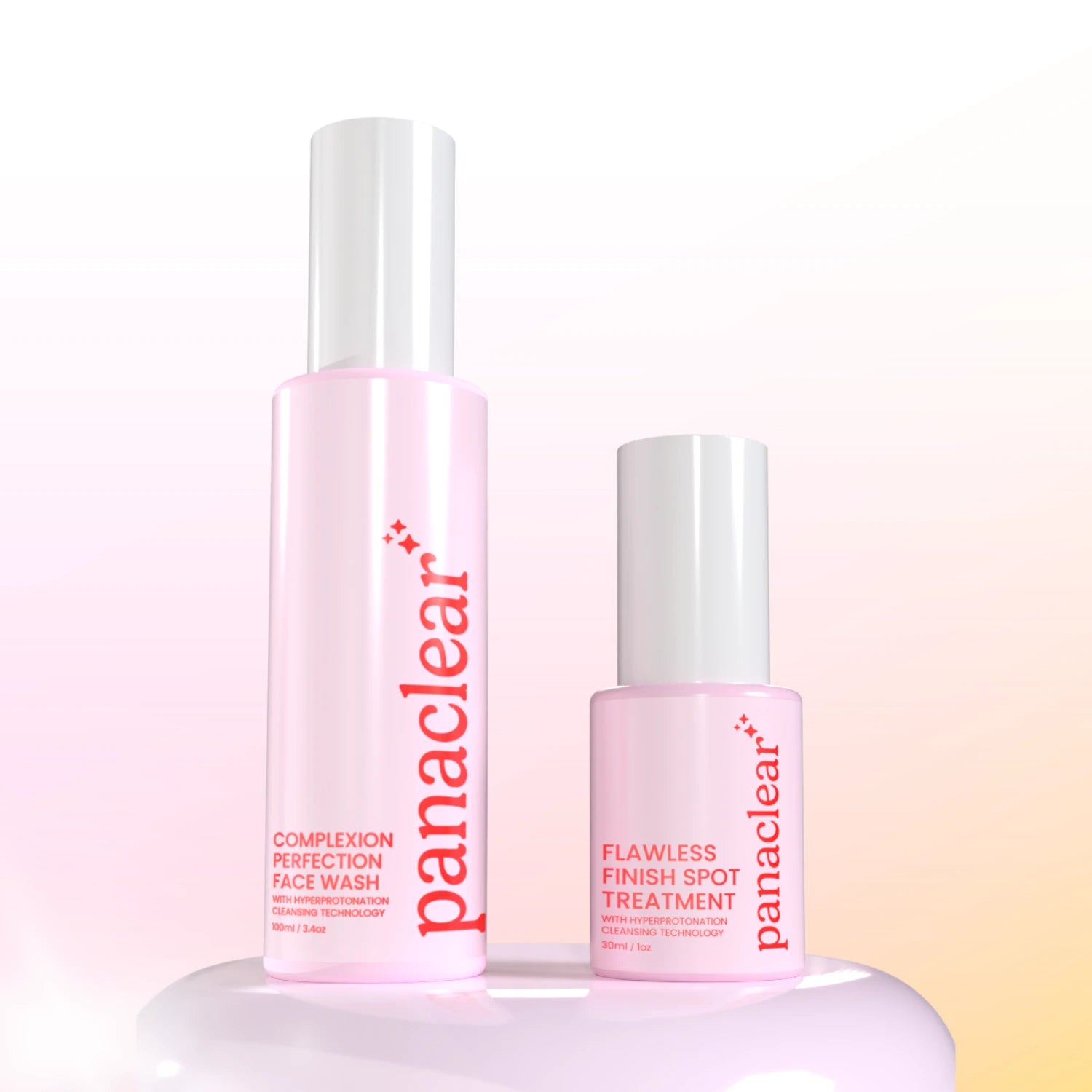
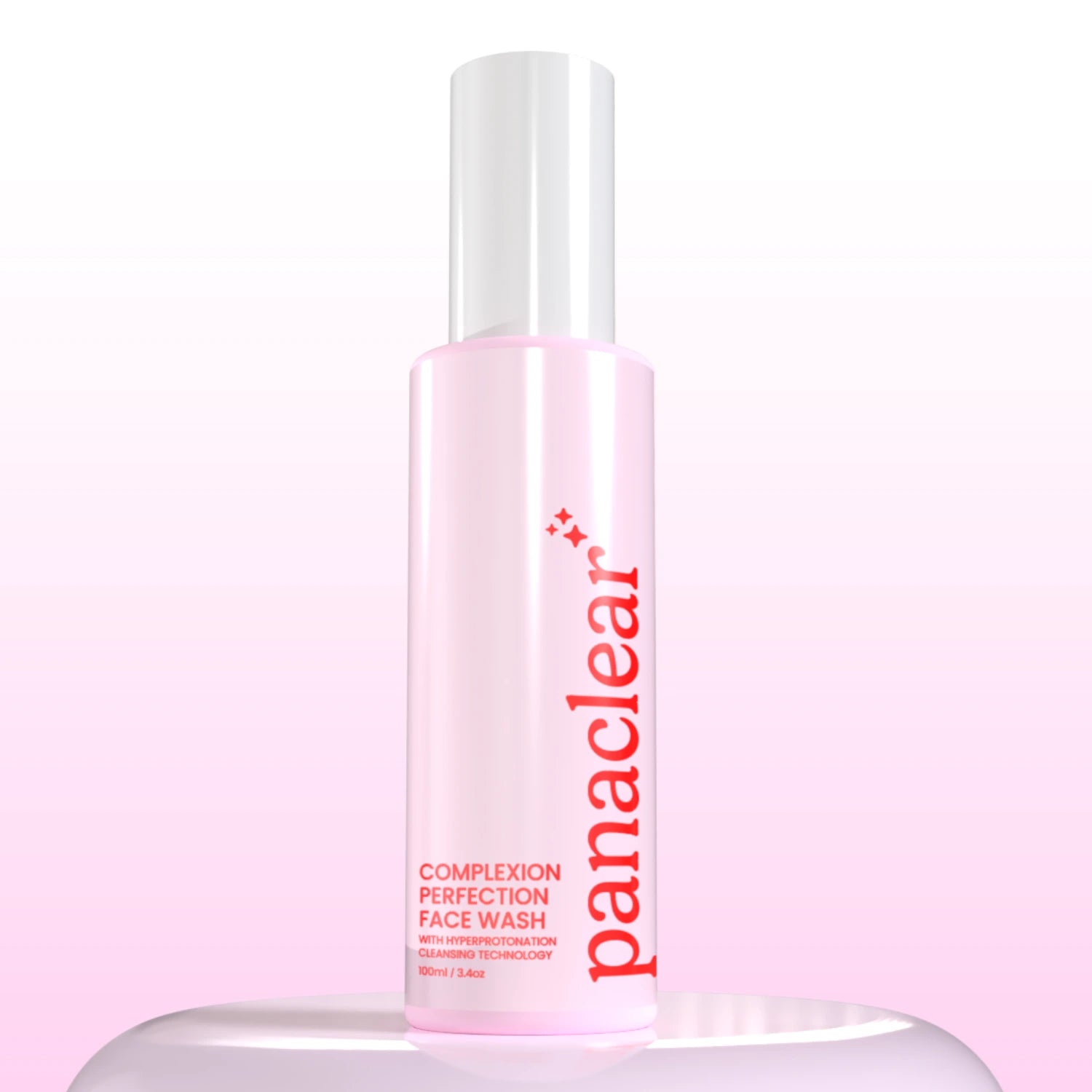
Panaclear's Complexion Perfection Face Wash, powered by hyperprotonation cleansing technology, is designed to cleanse biofilm without stripping the skin barrier. It is the difference between surface-level skincare and skincare that addresses what is actually driving the cycle.

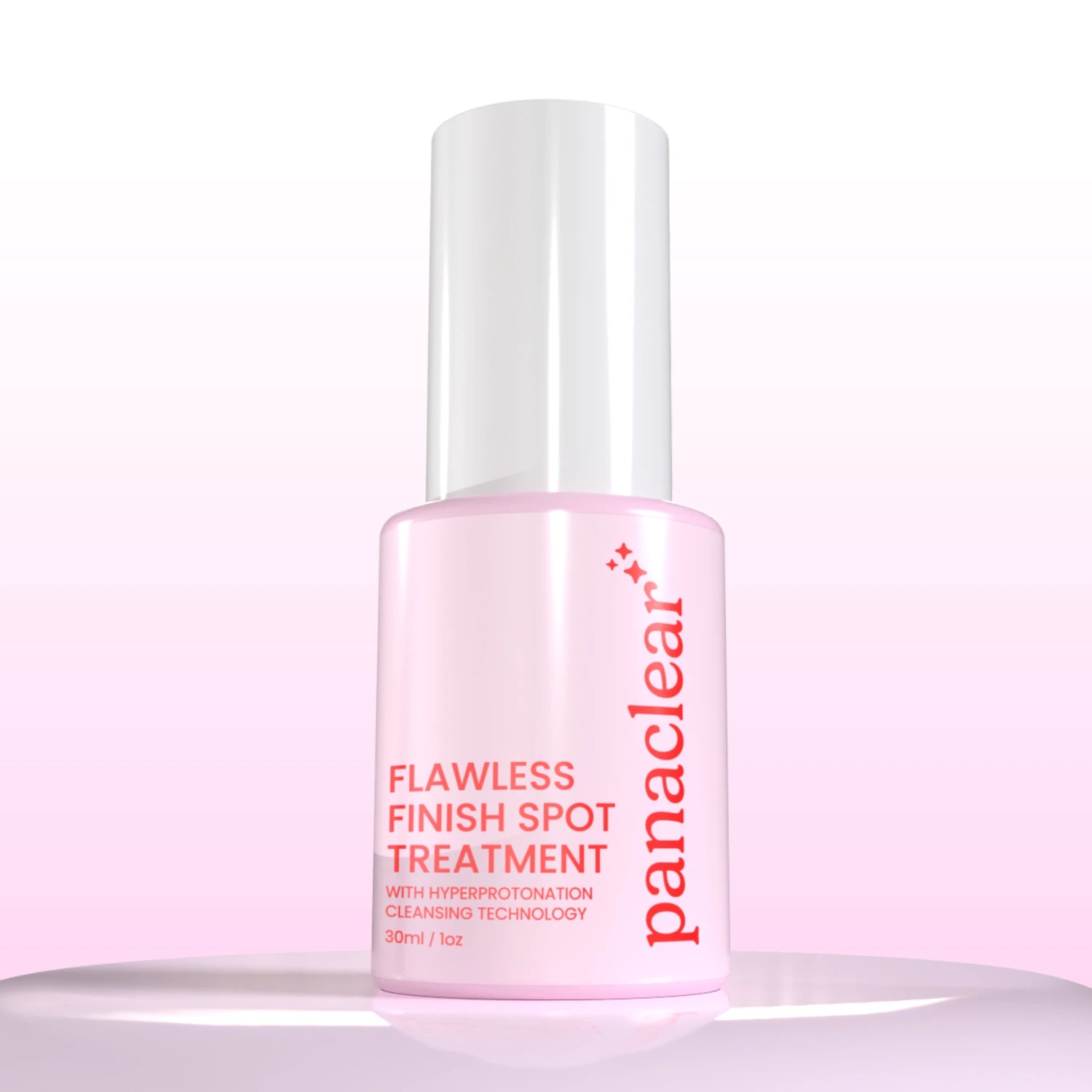
Best Skin Ever Bundle
Biofilm-targeting cleansing duo for calmer, clearer-looking skin.
SHOP NOW